

Treatments Offered
The time has arrived when dreams can become reality. Here you will find the list of treatments that we can offer.
Diagnostic

Diagnostics is a set of tools, technologies and methods that allow us to identify diseases, dysfunctions or anomalies of the organism and in particular, in our case, of the reproductive system. Thanks to the progress of science, diagnostics has evolved significantly, providing increasingly precise and often non-invasive tools to identify and possibly correct any alterations that cause infertility. Your doctor, at the end of the 1st consultation, will prescribe the diagnostic tests he deems essential.
Intrauterine Insemination

Intrauterine insemination or IUI is a first level assisted fertilization technique used to overcome some causes of infertility. With IUI, conception occurs in the uterus and not in the laboratory. We are talking about a procedure that is generally simple and often performed before other fertility treatments. IUI works mainly on the male seminal fluid that is selected before being introduced into the uterus.
In Vitro Fertilization

In vitro fertilization or IVF is an assisted reproduction technology that involves the collection of eggs from the woman's ovaries by follicle puncture . These eggs are then fertilized in the laboratory with the husband's or partner's sperm. The development of the resulting embryos is monitored until the selected embryo is transferred to the woman's uterus.
Cryopreservation

Cryopreservation is the process of storing sperm, eggs, and embryos in liquid nitrogen ( -196°C). Sperm can be successfully used after cryopreservation indefinitely. Egg freezing is a method of preserving a woman's fertility so she can try to have children at a later date (social freezing). Embryo cryopreservation is useful for embryos left over after an IVF cycle. For human embryos , the longest reported successful preservation is 24 years.
Preimplantation Diagnosis
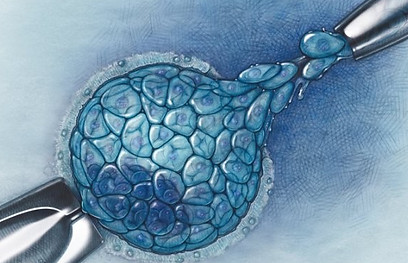
Preimplantation genetic diagnosis is the genetic testing of an embryo produced outside the body (in vitro) before it is transferred to the woman's uterus. Usually, a few cells are removed from the embryo that has reached the blastocyst stage and tested for specific genetic defects (gene mutations). Preimplantation genetic diagnosis includes aneuploidy screening, in which the embryo is checked for extra chromosomes or missing chromosomes.
Donation

Egg donation refers to the donation of oocytes by one woman (donor) to another (recipient). As the term suggests, it uses eggs from a donor external to the couple in an assisted fertilization technique defined for this reason as “heterologous”.
Women whose infertility is due to an ovulation problem, but not only (early menopause, poor oocyte quality, repeated homologous IVF failures, repeated embryo implantation failure, risk of transmitting a genetic disease to the fetus, repeated abortion without cause, etc.) can access egg donation.